The Tutankhamun Golden Throne is one of the most famous treasures discovered in the tomb of the young pharaoh Tutankhamun (KV62) in the Valley of the Kings. Discovered by Howard Carter in 1922, the throne is much more than an impressive piece of royal furniture. Its decoration tells a fascinating story about Tutankhamun, Queen Ankhesenamun, religion, royal power, and the artistic traditions of the Amarna Period.
What Is the Tutankhamun Golden Throne?
The Tutankhamun Golden Throne is a richly decorat
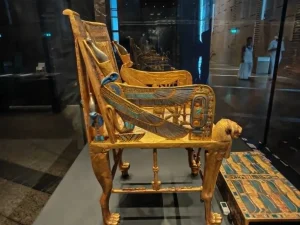
ed royal throne discovered inside Tutankhamun’s tomb. It was made primarily of wood and covered with gold, with elaborate decoration, colorful inlays, and carved elements.
The throne combines exceptional craftsmanship with important religious and political symbolism, making it one of the most significant objects from Tutankhamun’s tomb.
Where Was the Tutankhamun Golden Throne Discovered?
The throne was discovered in Tomb KV62 in the Valley of the Kings near Luxor. Howard Carter excavated the tomb in 1922, revealing one of the most extraordinary collections of ancient Egyptian royal treasures ever found.
The discovery of Tutankhamun’s tomb attracted worldwide attention and helped make the young king one of the most recognizable figures of ancient Egypt.
Why Is Tutankhamun’s Throne So Important?
The importance of the Golden Throne of Tutankhamun goes far beyond its gold decoration.
Its scenes and symbols provide valuable evidence about:
- Ancient Egyptian royal art
- Religious beliefs
- Royal power and kingship
- The relationship between Tutankhamun and Ankhesenamun
- The artistic traditions of the Amarna Period
- The religious transformation that followed the reign of Akhenaten
The throne is therefore both a magnificent work of art and an important historical document.
The Gold and Decorative Materials of the Golden Throne
The throne was crafted from wood and richly covered with gold. Its decoration includes colorful inlays and materials such as lapis lazuli, carnelian, turquoise-colored materials, faience, and colored glass.
Ancient Egyptian Craftsmanship
The detailed inlay work demonstrates the extraordinary skill of ancient Egyptian craftsmen. Gold, colored materials, carved wood, and decorative elements were carefully combined to create an object worthy of a pharaoh.
The throne was therefore not simply functional furniture. Its luxurious appearance communicated the wealth, authority, prestige, and sacred status of the king.
The Famous Scene on Tutankhamun’s Golden Throne
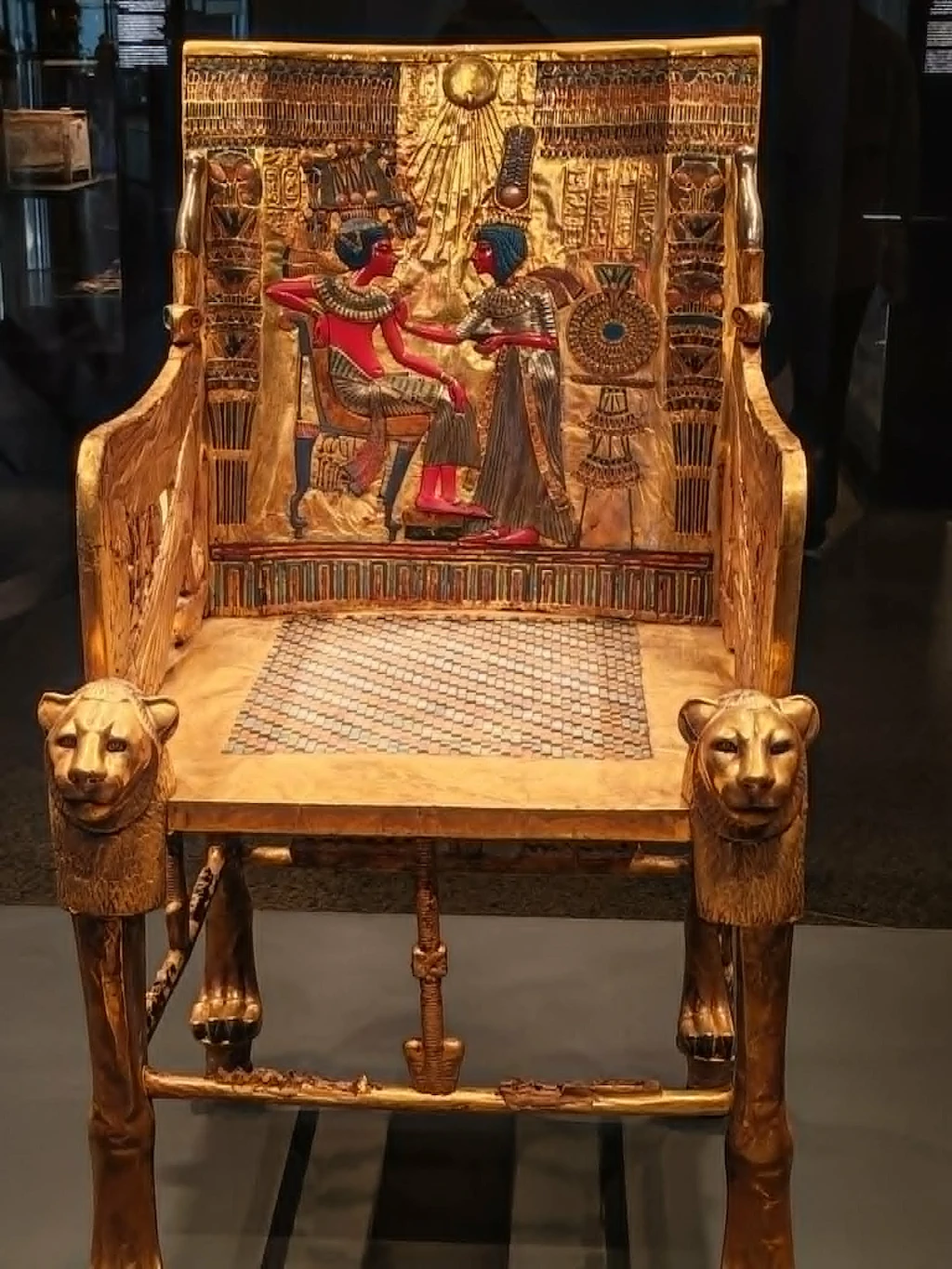
One of the most remarkable features of the Tutankhamun Golden Throne is the scene on its backrest.
Tutankhamun is shown seated while his wife, Queen Ankhesenamun, stands beside him and applies scented oil or perfume to his shoulder.
Unlike many formal representations of Egyptian kings, this scene appears intimate and relaxed. The interaction between the royal couple creates an unusually personal image of the young king and queen.
Tutankhamun and Queen Ankhesenamun
The depiction of Tutankhamun and Ankhesenamun is particularly important because royal couples were often represented in highly formal and symbolic ways.
Here, however, the queen is shown participating in a private-looking moment with the king. Their interaction reflects artistic traditions associated with the Amarna Period, when representations of the royal family became more dynamic and personal.
The Aten Symbolism on Tutankhamun’s Golden Throne
Above Tutankhamun and Ankhesenamun appears the Aten sun disk, with rays extending toward the royal couple.
The Rays of Aten and the Ankh
Some of the rays end in hands holding the ankh, the ancient Egyptian symbol of life.
This imagery reflects the religious and artistic influence of the Amarna Period, when the Aten became the central focus of royal religious ideology under Pharaoh Akhenaten.
The Amarna Influence on the Throne
The presence of the Aten is particularly significant because Tutankhamun’s reign followed the dramatic religious changes introduced during the Amarna Period.
The throne therefore preserves important elements of Amarna artistic traditions even as Egypt was returning to the worship of traditional gods, especially Amun.
Related Tours
Tutankhamun’s Name and the Religious Transformation
Tutankhamun was originally known as Tutankhaten, a name associated with the Aten.
From Tutankhaten to Tutankhamun
Following the restoration of traditional religious practices, his name was changed to Tutankhamun, reflecting the renewed importance of the god Amun.
This change was part of a wider restoration of traditional Egyptian religious and political traditions after the Amarna Period.
The Return to the Worship of Amun
Tutankhamun’s reign represents an important transitional period in Egyptian history. The throne preserves evidence of this transition by combining imagery associated with the Aten with the renewed religious identity of the young king.
This mixture makes the Golden Throne of Tutankhamun particularly valuable for understanding the changes taking place in ancient Egypt during the late 18th Dynasty.
The Lions on the Tutankhamun Golden Throne
The throne also contains powerful images of lions.
The legs are designed in the form of lion legs, while lion heads decorate the front of the armrests.
Lions as Symbols of Strength and Protection
Lions had strong associations with strength, protection, courage, and royal authority in ancient Egyptian symbolism.
Their presence on the throne reinforces the image of the pharaoh as a powerful and protected ruler.
The Lion Legs and Armrests
The carefully carved lion forms are not merely decorative. They contribute to the throne’s overall message of royal power and majesty.
The combination of gold, lion imagery, and royal figures creates an imposing visual representation of kingship.
The Footstool and the Nine Bows
The footstool associated with Tutankhamun’s throne also carries important political symbolism.
The Nine Bows and Egypt’s Enemies
The Nine Bows were a traditional Egyptian symbol representing foreign enemies, hostile peoples, or those considered to be under the authority of the Egyptian king.
The exact groups represented by the Nine Bows could vary according to historical and artistic context.
The Political Meaning of the Footstool
By placing these symbols beneath the king’s feet, the artwork communicated a powerful message of royal authority.
The footstool was therefore more than a practical object. It formed part of the larger visual language of Egyptian kingship, presenting the pharaoh as the ruler who maintained order and controlled the forces threatening Egypt.
Tutankhamun’s Golden Throne and Ancient Egyptian Kingship
The throne demonstrates how Egyptian royal objects could combine several messages at the same time.
Its gold represented luxury and prestige. The lions communicated strength and protection. The royal couple represented the king’s position within the royal family, while the Aten rays preserved an important connection to the religious traditions of the Amarna Period.
Together, these elements transformed the throne into a powerful statement about kingship, religion, wealth, and divine protection.
Why the Tutankhamun Golden Throne Is Important
The importance of the Tutankhamun Golden Throne goes far beyond its precious materials.
A Combination of Art, Religion, and Royal Power
The throne combines artistic beauty with religious symbolism, political messages, and representations of royal life.
The image of Tutankhamun and Ankhesenamun provides a rare human dimension, while the Aten disk and other symbols reveal the religious changes of the period.
A Window into the Amarna Period
The throne preserves a fascinating mixture of Amarna artistic traditions and traditional Egyptian royal symbolism.
It helps historians and visitors understand one of the most important transitional periods in ancient Egyptian history, when Egypt was moving away from the religious system of Akhenaten and restoring traditional beliefs.
What Does Tutankhamun’s Golden Throne Tell Us About Ancient Egypt?
The throne provides insights into several aspects of ancient Egyptian civilization:
- Royal life: The scene of Tutankhamun and Ankhesenamun offers an unusually personal representation of the royal couple.
- Religion: The Aten disk and ankh imagery preserve elements of Amarna religious traditions.
- Kingship: The lions and royal imagery emphasize the strength and authority of the pharaoh.
- Politics: The Nine Bows symbolize the king’s dominance over enemies and forces threatening Egypt.
- Art: The throne demonstrates the exceptional craftsmanship of Egyptian goldsmiths, woodworkers, and inlay specialists.
- History: The combination of Aten imagery and the restored worship of Amun reflects the religious transformation of the late 18th Dynasty.
The Tutankhamun Golden Throne as a Historical Masterpiece
The Tutankhamun Golden Throne is not simply a luxurious piece of royal furniture. It is a remarkable historical and artistic document.
Through its images and symbols, the throne tells us about royal life, marriage, religion, political power, artistic traditions, and the changing beliefs of ancient Egypt.
More than 3,000 years after it was created, the throne remains one of the most recognizable treasures associated with Tutankhamun. Its exceptional craftsmanship, gold decoration, religious symbolism, and intimate representation of the young king with Queen Ankhesenamun make it one of the great masterpieces of ancient Egyptian art.
For anyone interested in Tutankhamun, the Valley of the Kings, ancient Egyptian history, or the Amarna Period, the Golden Throne offers a fascinating glimpse into the world of Egypt’s most famous young pharaoh.