King Khufu’s Tiny Statue and the Great Pyramid: An Ancient Egyptian Mystery
Imagine a pharaoh whose monument was once the tallest structure in the world, yet whose surviving statue is only 7.5 centimeters tall. This is the fascinating contrast between King Khufu, also known as Cheops, and the Great Pyramid of Giza.
The tiny ivory statuette and the enormous pyramid tell two very different stories about one of ancient Egypt’s most famous kings.
The Smallest Statuette of King Cheops
The famous Khufu statuette is one of the most remarkable royal artifacts from ancient Egypt. Made of ivory, it measures just 7.5 centimeters in height.
British archaeologist Sir William Matthew Flinders Petrie discovered it in 1903 at Abydos, in Upper Egypt, in the Temple of Osiris at Kom el-Sultan. Today, the statuette is displayed at the Egyptian Museum in Cairo.
The figure shows King Khufu seated on a throne, wearing the Red Crown of Lower Egypt and holding a royal flail. Despite its tiny size, the statue provides a rare three-dimensional representation of the pharaoh who built the Great Pyramid.
How Do We Know the Statue Represents King Khufu?
The most important clue is the king’s name carved on the side of the throne. This inscription allows researchers to identify the figure as Khufu.
Without this inscription, identifying the king with certainty would be much more difficult. The discovery is especially significant because so few complete three-dimensional representations of Khufu are known.
The statue demonstrates that even a small archaeological object can provide valuable evidence about the rulers of ancient Egypt.
King Khufu and the Great Pyramid of Giza
King Khufu ruled during Egypt’s Fourth Dynasty of the Old Kingdom, around 2589–2566 BC. He is best known as the king associated with the Great Pyramid of Giza, one of the greatest achievements of ancient engineering.
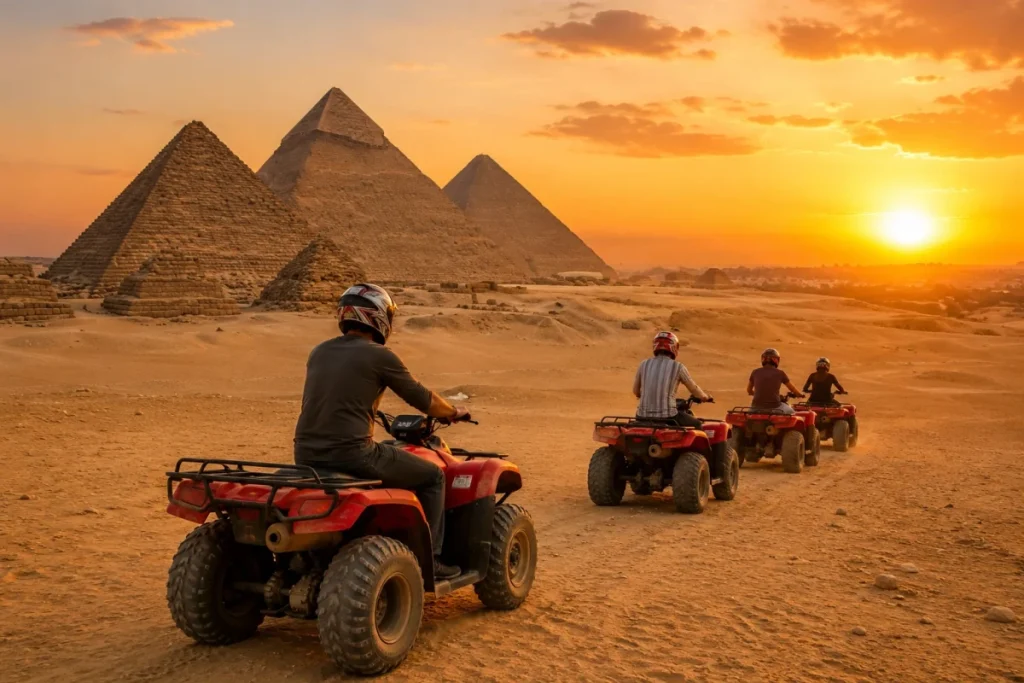
The pyramid originally stood approximately 146.5 meters tall. For nearly 3,800 years, it remained the tallest human-made structure in the world.
It is also the only surviving monument of the Seven Wonders of the Ancient World.
Although the Great Pyramid is not the oldest pyramid in Egypt, its enormous scale and sophisticated design make it one of the most extraordinary monuments of the ancient world.
How Was the Great Pyramid Built?
The construction of the Great Pyramid required extensive planning, skilled labor, transportation, and a highly organized administration.
The pyramid contains an estimated 2.3 million stone blocks, although their sizes and weights vary considerably. Its original outer casing was made of fine white limestone, much of which has disappeared over the centuries.
The exact construction methods remain a subject of research and discussion. Archaeological evidence continues to help researchers understand how ancient Egyptian builders moved materials and organized such a massive project.
The pyramid is a lasting testament to the engineering skills and organizational capabilities of ancient Egyptian society.
Why Is the Smallest Statuette of King Cheops So Rare?
The contrast between the tiny ivory statuette and the enormous pyramid naturally raises questions. Why has such a small statue survived when Khufu is associated with one of the largest monuments ever built?
The answer is that archaeological survival depends on many factors, including the materials used, the locations where objects were deposited, and the circumstances of their discovery.
The statuette was found at Abydos rather than inside the Great Pyramid. Its discovery shows that royal objects could be associated with religious sites far from a king’s principal burial monument.
Although the statue is small, its historical importance is considerable because it preserves the king’s name and provides a rare image of Khufu.
Did King Khufu Leave Other Mysteries Behind?
The Great Pyramid continues to inspire questions about its internal chambers, construction techniques, and purpose. Modern archaeological research, including non-invasive scanning technologies, has identified features that researchers continue to investigate.
However, mysteries should be distinguished from proven facts. Claims about hidden rooms, the destruction of the pyramid after Khufu’s death, or the exact circumstances surrounding the statue must be evaluated against archaeological evidence.
What is certain is that the Great Pyramid and the ivory statuette offer two extraordinary windows into the world of the pharaohs.
Discover the Smallest Statuette of King Cheops and the Great Pyramid with Egypt Breeze Tours
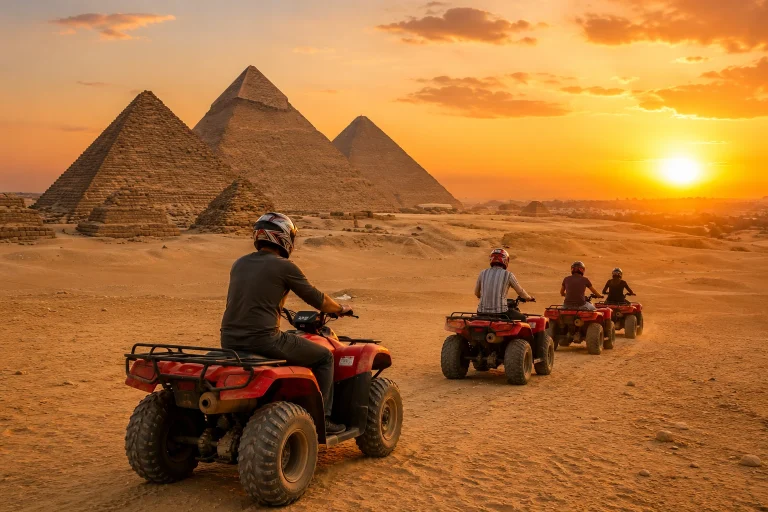
Stand before the Great Pyramid of Giza and experience the scale of the monument associated with King Khufu. Explore the Giza Plateau, learn about ancient Egyptian engineering, and discover the stories behind one of humanity’s greatest architectural achievements.
Plan your visit with Egypt Breeze Tours:
Grand Egyptian Museum and Giza Pyramids Tour – Cairo Day Trip
Discover the history of the pharaohs with a guided tour of Giza’s iconic monuments and the treasures of ancient Egypt.