The Role of Scribes in Ancient Egypt
Ancient Egyptian scribes played a vital role in managing one of the world’s earliest civilizations. They worked in royal palaces, temples, and government offices, recording taxes, trade, harvests, royal decrees, and religious texts.
Because few people could read and write, ancient Egyptian scribes were highly valued by the pharaohs and senior officials. Some rose to powerful administrative positions, helping govern the kingdom and preserve its knowledge for future generations.
How Did Ancient Egyptians Write?
Ancient Egyptians developed a writing system more than 5,000 years ago. They wrote on papyrus, stone monuments, and pottery or limestone fragments known as ostraca.
Papyrus was made from a plant that grew along the Nile River. Scribes used reed pens and ink to write documents. They also used different scripts, including hieroglyphs for monumental inscriptions and hieratic for many everyday records.
The Famous Seated Scribe Statue
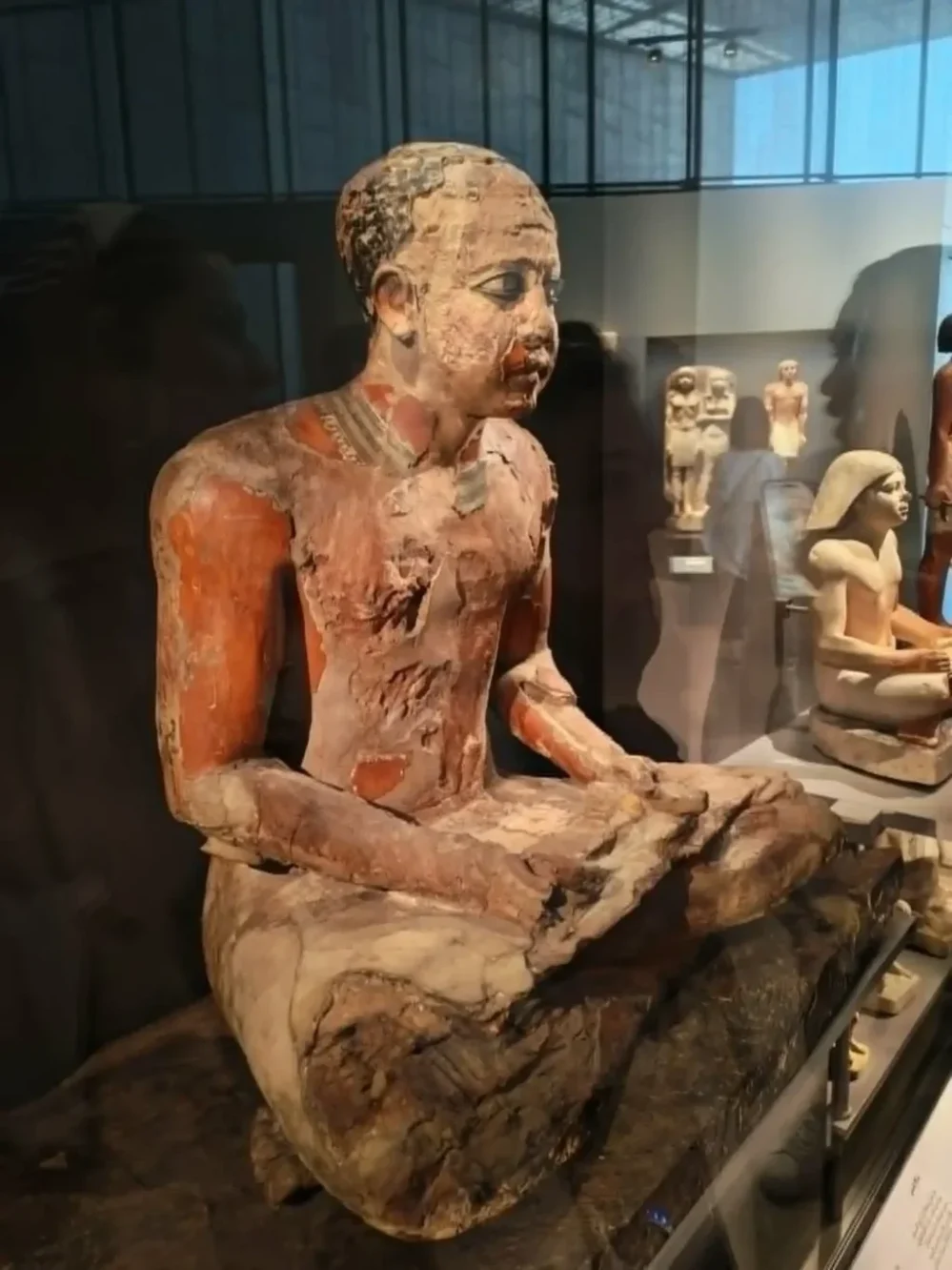
The famous Seated Scribe is one of the best-known sculptures representing an ancient Egyptian scribe. Made primarily of painted limestone, it features carefully crafted eyes incorporating materials such as rock crystal and copper.
The celebrated statue discovered at Saqqara is now displayed at the Louvre Museum in Paris. Its realistic face and attentive expression make it an outstanding example of Old Kingdom Egyptian art.
How Do We Know About Ancient Egyptian Scribes?
Historians learn about scribes through inscriptions, papyrus documents, tomb paintings, statues, and archaeological discoveries. These sources reveal how scribes recorded information and helped manage the kingdom.
Tomb scenes sometimes depict scribes sitting cross-legged with writing materials on their laps, offering clues about their work and daily lives.
Why Were Scribes Important to the Pharaohs?
Ancient Egyptian scribes played a crucial role in the government of the pharaohs. They recorded taxes, agricultural production, trade, and construction projects, helping officials manage the kingdom’s wealth and resources.
Beyond administration, scribes documented religious beliefs, royal achievements, and important historical events. Their records helped preserve the knowledge of ancient Egyptian civilization and provide historians today with valuable insights into life during the age of the pharaohs.
Discover Ancient Egypt at the Grand Egyptian Museum
Explore the history of the pharaohs and discover remarkable archaeological treasures at the Grand Egyptian Museum near the Giza Pyramids.
Plan your visit with Egypt Breeze Tours:
Grand Egyptian Museum and Giza Pyramids Tour
Discover the wonders of ancient Egypt and the stories behind its world-famous monuments.