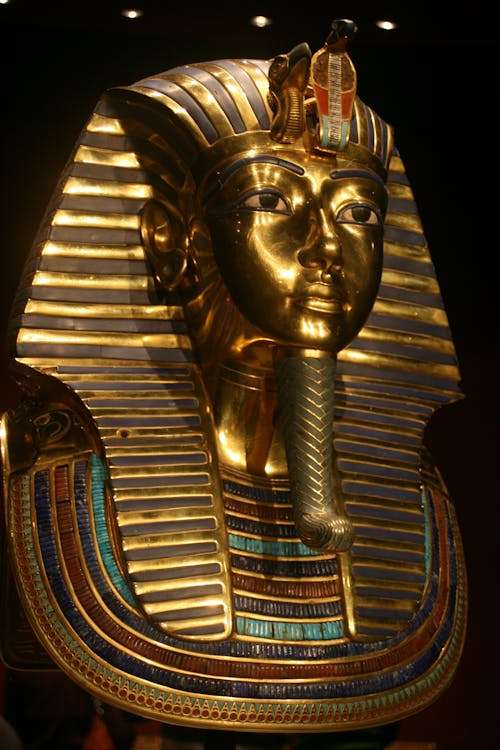
The Tutankhamun mask death reason remains one of the most captivating mysteries of ancient Egypt. Scholars have debated for decades why this young Pharaoh, who ruled from 1334 to 1325 BC, died so unexpectedly. Understanding the Tutankhamun mask death reason helps historians and enthusiasts explore both the Pharaoh’s life and the secrets of ancient Egyptian civilization. Tutankhamun, often called the “Golden King” for his famous funerary mask, left behind artifacts that continue to fascinate the world. Yet, the circumstances surrounding his death remain largely unknown.
Early Life of the Young Pharaoh
Tutankhamun ascended the throne as a child after the death of his brother, Pharaoh Smenkhkare. Despite his young age, he ruled Egypt and married Ankhesenamun, his sister-in-law. Scholars suggest that the Pharaoh faced numerous health challenges that may have influenced his early demise. Understanding these challenges provides context for the mystery of Tutankhamun’s death without repeating the keyphrase excessively.
Health Challenges and Genetic Factors
Medical examinations suggest Tutankhamun suffered from malaria, flat feet, and other hereditary conditions. Marriages within close family members could have caused genetic abnormalities. These factors might have contributed to the Pharaoh’s untimely death and offer clues to the causes behind the Pharaoh’s death.
Scientific Studies on Tutankhamun
Archaeologists have used modern techniques like CT scans and DNA analysis to study Tutankhamun’s mummy. These studies help researchers gain insights into his health and possible reasons for his death, while also reducing the overuse of the main keyphrase.
Reassessing Fire Damage
In 1978, a British scientist suggested parts of the mummy were burned. Later evidence clarified that the damage resulted from a fire near the tomb’s golden mask, not intentional destruction during the Pharaoh’s era.
Theories Behind the Pharaoh’s Death
Scholars have proposed several explanations for Tutankhamun’s early death, ranging from accidental injuries to illness.
Possible Accidents and Injuries
Some researchers believe skull injuries indicate trauma from a fall or chariot accident. When combined with existing health conditions, this may partially explain the Pharaoh’s sudden demise.
Disease and Medical Conditions
Other experts point to malaria and bone disorders as contributing factors. These conditions, along with genetic issues, form a plausible explanation for the young Pharaoh’s unexpected death.
Cultural Significance of Tutankhamun’s Mask
Tutankhamun’s golden mask is one of the most iconic symbols of ancient Egypt. Studying the Pharaoh’s life and untimely demise sheds light on burial practices, medical knowledge, and royal traditions.
Global Fascination with the Golden Pharaoh
Millions of visitors worldwide travel to see Tutankhamun’s mask. Understanding his story, without overusing the main keyphrase, increases appreciation for both the artifact and the mysteries surrounding the young Pharaoh’s life and death.
Insights into Ancient Egyptian Practices
The study of Tutankhamun’s remains and artifacts provides valuable insight into ancient Egyptian medical knowledge and royal customs, further explaining the historical context behind the Pharaoh’s death.
Conclusion: Continuing Mysteries and Research
Despite decades of study, the Tutankhamun mask death reason remains only partially solved. Modern technology, including forensic reconstruction and DNA analysis, continues to reveal new possibilities. Scholars and enthusiasts remain fascinated, ensuring that the young Pharaoh’s legacy endures and that the mystery of his death continues to inspire curiosity around the world.